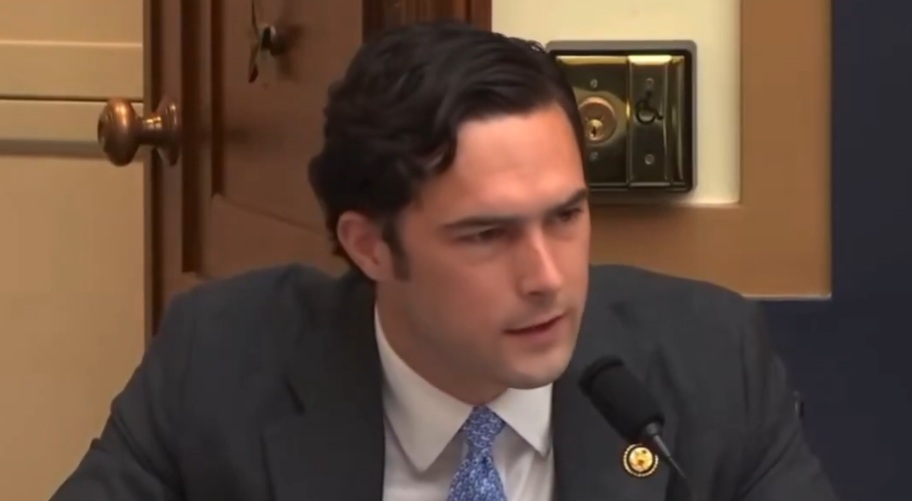
WASHINGTON, D.C. — Congressman Brandon Gill is drawing national attention after issuing a forceful call for mass deportations of individuals residing in the United States illegally, while firmly rejecting any form of amnesty legislation currently under discussion in Congress.
Gill, a first-term Republican, has positioned himself as a leading voice among lawmakers advocating for stricter immigration enforcement. In recent remarks, he argued that the federal government has failed to uphold existing immigration laws, contributing to what he described as a growing crisis at the southern border.
“We cannot restore order or maintain sovereignty if we continue to ignore the rule of law,” Gill said. “Mass deportations are not a political talking point—they are a necessary step to reestablish credibility in our immigration system.”
The congressman has also been outspoken in his opposition to proposals that would grant legal status to undocumented immigrants already living in the country. He has criticized bipartisan discussions around potential amnesty measures, arguing that such policies would incentivize further illegal immigration.
“Amnesty sends exactly the wrong message,” Gill said. “It tells the world that if you enter the United States unlawfully, you will eventually be rewarded. That undermines every legal immigrant who followed the process correctly.”
In addition to his stance on deportations and amnesty, Gill recently opposed efforts to extend temporary protections for Haitian nationals currently residing in the U.S. under programs such as Temporary Protected Status (TPS). The Biden administration has considered extending protections due to ongoing instability in Haiti, but Gill has argued that such extensions should not become indefinite.
“Temporary programs should remain temporary,” Gill said. “We cannot continue to expand these protections without a clear endpoint or without addressing the broader enforcement failures that created this situation.”
Gill’s positions have been praised by some conservatives who favor a hardline approach to immigration enforcement, while critics argue that mass deportations would be logistically complex and economically disruptive. Immigration advocates have also raised humanitarian concerns about removing large populations, particularly those with longstanding ties to U.S. communities.
As immigration policy continues to dominate debate in Washington ahead of the 2026 election cycle, Gill’s proposals are likely to remain a focal point in discussions over the future direction of U.S. border and immigration enforcement.