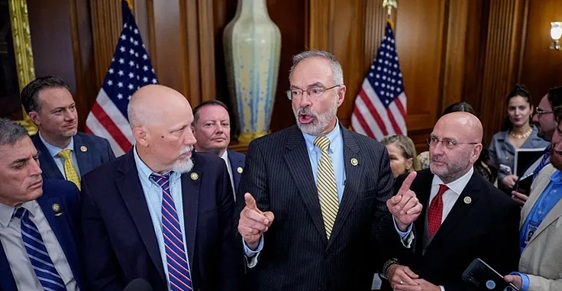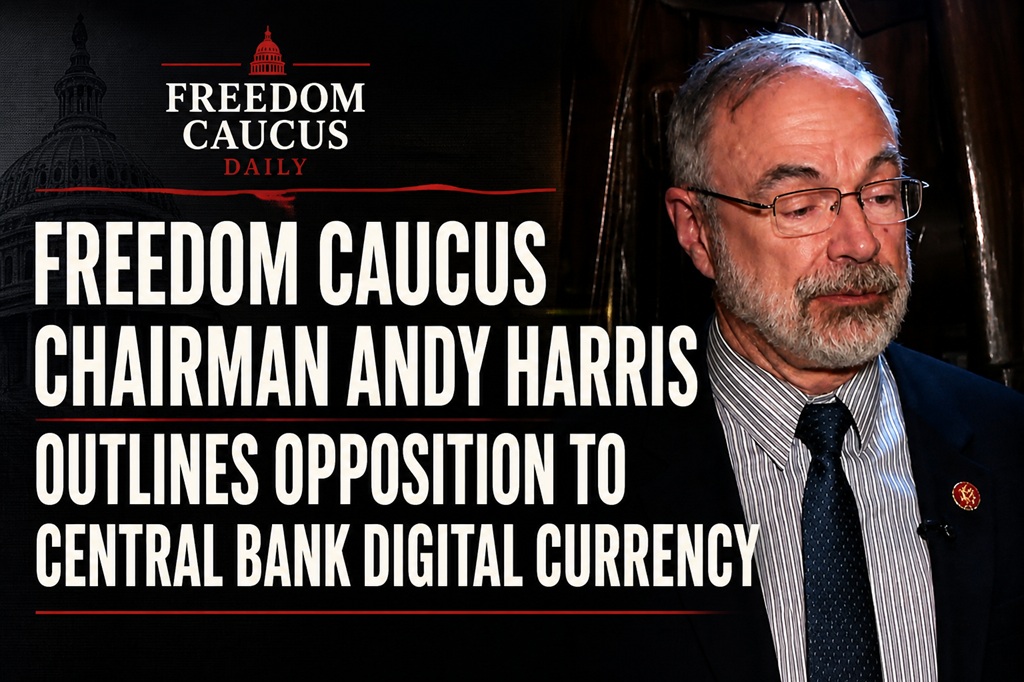
House Freedom Caucus Chairman Andy Harris of Maryland said he opposes a Central Bank Digital Currency and wants Congress to block the federal government from creating one, Harris explained in an interview with Real America’s Voice host Tony Perkins.
Harris said he believes a digital currency controlled by the federal government would give Washington too much power.
In the interview, Harris told Perkins that the “federal government should have the ability, just like China does, to monitor all your financial transactions, and in that way, limit what financial transactions they allow you to make.
Harris maintained that the issue down to limits on federal authority explaining that he was among the members of Congress who “believe the set the government should not have that power” going on to assert that he opposed a Central Bank Digital Currency because he believed it handed the government the ability to track Americans every financial transaction.
Harris said the debate centers on constitutional boundaries. “I would call that more constitutional in limiting the power of the government according to the Constitution,” Harris told Perkins what his opposition to a Central Bank Digital Currency boiled down to.
The House Freedom Caucus attempted to attach a ban on a Central Bank Digital Currency to an extension of Section 702 of the Foreign Intelligence Surveillance Act. The Senate passed a clean 45‑day extension of Section 702, and the House accepted it.
Perkins asked Harris how the next 45 days might unfold since the House and the Senate hadn’t yet arrived at a consensus on Central Bank Digital Currency policy.
“How do you think that might work out over the next 45 days? Are you going to be able to bring the Senate to a place of agreeing to something that’s reasonable?” Perkins wondered.
Harris said he wants Congress to enact a permanent prohibition. “Look, I hope we do what they sent. They said they attached part of the central bank digital currency ban to the housing bill, but they watered it down. They let it expire. This should be a permanent ban,” he said.
He said the issue goes beyond financial policy. “This is an issue. Just like you say, it’s a constitutional issue, the government should never have the ability to monitor your financial transactions and control them you them.”
Lawmakers now have 45 days to negotiate the next version of the legislation.