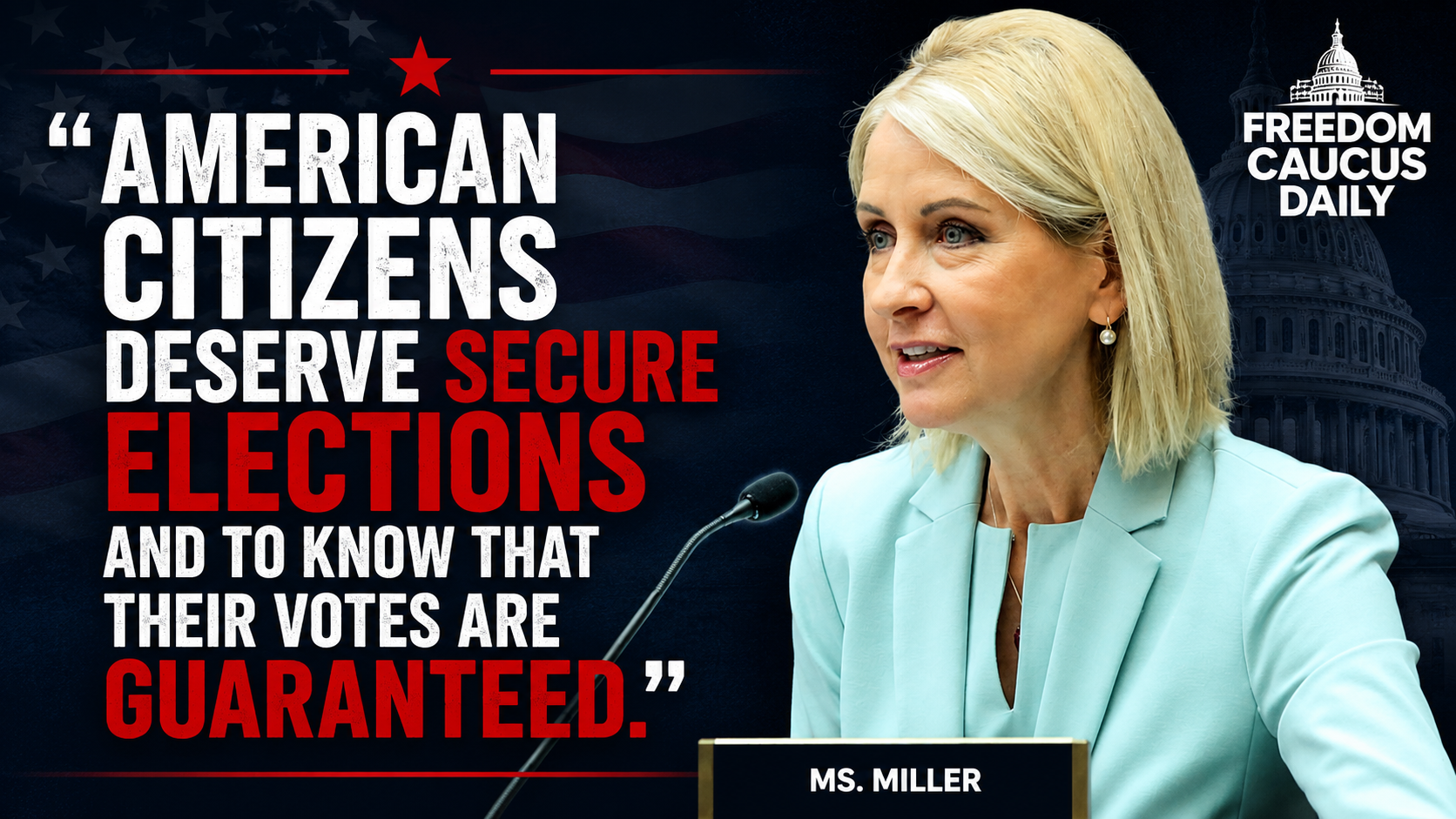
Illinois Representative Mary Miller is urging congressional leaders to advance the SAVE Act, legislation that would require proof of U.S. citizenship to register to vote in federal elections. She has framed the bill as essential to preventing unlawful voting and restoring public confidence in election administration.
Miller said the measure responds to growing concerns among voters about the accuracy of voter rolls and the potential for noncitizens to participate in elections. She wrote on asking why is “Illinois REFUSING to clean their voter rolls if there’s nothing to hide? You don’t fight voter roll audits this hard unless you’re afraid of what it will find.”
Supporters of the SAVE Act say the bill would close gaps in federal law by requiring documentary proof of citizenship during voter registration, a requirement that currently varies by state. They argue that the measure would prevent unlawful registrations and ensure that election officials have consistent standards for verifying eligibility.
Miller has pointed to recent enforcement actions as evidence that noncitizen voting can occur.
On April 22, the Department of Homeland Security announced that a Mexican national pleaded guilty to voter fraud after falsely claiming U.S. citizenship and casting ballots in multiple elections. Federal prosecutors said the individual had registered to vote using fraudulent documentation and participated unlawfully in federal contests. Miller’s office has cited the case as an example of why additional safeguards are needed.
The Illinois lawmaker has also emphasized the bill’s provisions aimed at preventing foreign nationals from participating in ballot‑collection efforts. She previously supported H.R. 8721, the Preventing Foreign Interference in American Elections Act, which prohibits foreign nationals from funding ballot harvesting or ballot‑collection operations. Miller has argued that both measures work together to address vulnerabilities in election administration.
Supporters of the SAVE Act say the legislation would establish uniform verification standards, reduce opportunities for unlawful participation, and strengthen public trust in election outcomes. They argue that requiring proof of citizenship is consistent with existing federal requirements for jury service, federal employment, and other civic responsibilities.
Opponents of similar proposals in the past have raised concerns about administrative burdens and the potential for eligible voters to face additional documentation hurdles. Supporters counter that the bill includes provisions allowing election officials to verify citizenship through multiple forms of documentation and that the reforms are narrowly tailored to prevent unlawful registrations.
Miller has said she intends to continue pressing for the bill’s passage, arguing that election integrity depends on clear and enforceable eligibility standards. Her office has indicated that additional election‑security proposals may be introduced as Congress prepares for the next federal reporting cycle on voter‑roll maintenance practices.