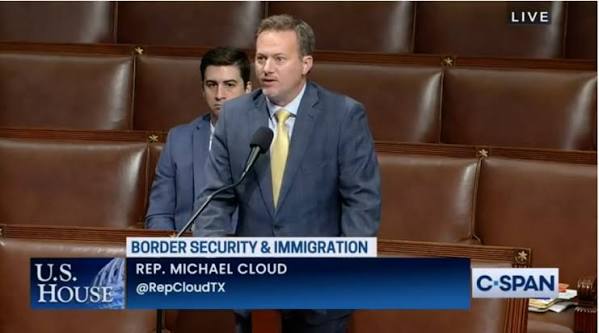
Texas Rep. Michael Cloud introduced legislation requiring congressional scorekeepers to add projected interest costs to the price tag of every bill. He pointed to Treasury data showing the federal government spent more servicing its debt in fiscal 2026 than it spent on national defense.
In a post on X, Cloud cited $1.052 trillion in net interest outlays for the fiscal year, against $0.965 trillion for national defense.
His bill, H.R. 10327, the Cost Estimates Improvement Act, would require the Congressional Budget Office and the Joint Committee on Taxation to include the debt-servicing costs created by new deficit spending in their official cost estimates. Earlier versions of the measure did this by amending the Congressional Budget Act of 1974. Under current practice, those estimates count a bill’s direct changes to spending and revenue. They leave out the interest the government pays on any money it borrows to cover the gap. The National Taxpayers Union Foundation called that omission an incomplete accounting of what legislation costs.
“That’s why I introduced the Cost Estimates Improvement Act—to require the Congressional Budget Office to include debt-servicing costs in its estimates, ensuring lawmakers and taxpayers alike have a full picture of the long-term impact of Washington’s spending habits,” Cloud said when he introduced an earlier version of the bill.
The fiscal 2026 numbers give his argument fresh weight. Treasury’s final monthly statement for the year showed a $2.0 trillion deficit, produced by $7.4 trillion in spending against $5.4 trillion in revenue. Debt held by the public rose to $32.4 trillion. According to an American Action Forum analysis of the Treasury figures, net interest ranked as the third-largest federal expense, behind only Social Security and Medicare.
Cloud has pushed versions of the proposal across several Congresses. A prior iteration, H.R. 8341, cleared the House Budget Committee. That version drew cosponsors from across the aisle, including Reps. Dan Meuser of Pennsylvania, Jared Golden of Maine, Ed Case of Hawaii, Tom McClintock of California and Marie Gluesenkamp Perez of Washington.
Golden framed the issue around what members know before they vote. “It’s beyond time for Congress to treat interest payments as the major expenditure they are, and that starts by informing lawmakers about the entire, long-term cost of a bill before a vote,” he said.
Outside groups have lined up behind the concept, among them Americans for Prosperity, Heritage Action, the Manhattan Institute and the Committee for a Responsible Federal Budget. Maya MacGuineas, the committee’s president, said leaving interest out of official scores “misses a real and important cost, particularly when offsets would be implemented down the road.”
The pressure behind the bill keeps building. The Committee for a Responsible Federal Budget projects annual interest payments could pass $2 trillion by 2036.