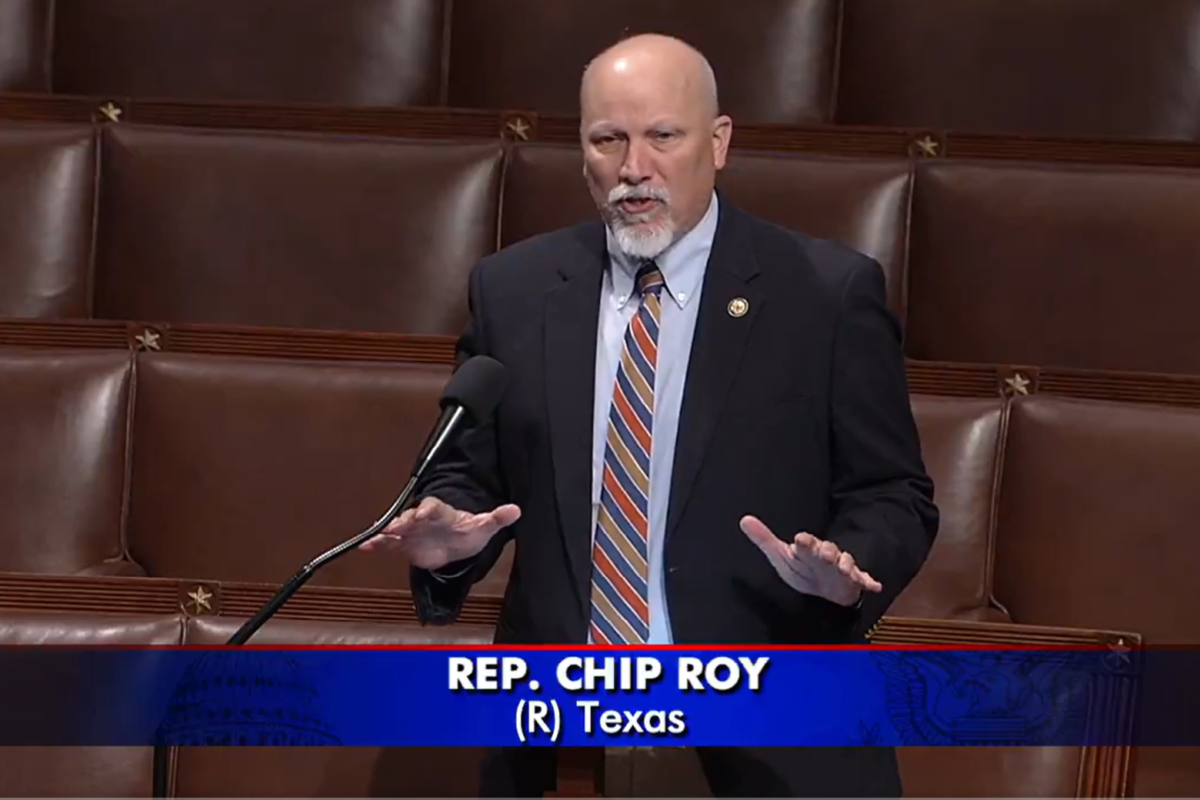
Representative Brandon Gill introduced legislation requiring all naturalization applicants to meet the same English proficiency and civics standards regardless of age, eliminating exemptions that have applied to older lawful permanent residents for decades.
The English Language Proficiency Act would rescind long-standing carve-outs in federal naturalization law. Under current rules, applicants over 50 who have held lawful permanent residency for at least 20 years, and applicants over 55 with at least 15 years of residency, are exempt from the English language test. Applicants over 65 with 20 years of residency also receive additional leniency on the civics exam. Gill’s bill would remove all three exceptions.
Gill said the legislation is about consistency, not new barriers to citizenship. “English is the common tongue that holds American communities together,” he said. “It is of paramount importance that every American citizen be able to communicate in the same language. My bill holds everyone to the same standard already on the books, restoring equal treatment under nationalization law.”
The bill does not create new requirements for citizenship. It simply removes an age-based exception that currently allows some applicants to bypass standards required of everyone else.
Supporters of the measure point to shifting demographic data as part of the rationale. Census Bureau figures cited alongside the bill’s rollout show that the number of U.S. residents who speak a language other than English at home has grown from 23.1 million, or roughly 1 in 10 people, to 67.8 million, or roughly 1 in 5, over the past several decades.
Spanish remains the most common non-English language spoken in American households. Chinese follows, spoken in 3.49 million homes, or 5.2 percent of non-English-speaking households. Tagalog is spoken in 1.7 million homes, Vietnamese in 1.5 million, and Arabic in 1.2 million.
Representatives Randy Fine, Barry Moore, and Beth Van Duyne have signed on as cosponsors. The bill has also drawn backing from the Immigration Accountability Project and Pro English, two organizations that have pushed for stricter language requirements in the naturalization process.
The measure now heads to committee, where its path forward will depend on how lawmakers weigh the elimination of age-based exemptions against concerns raised by advocacy groups representing elderly immigrants.