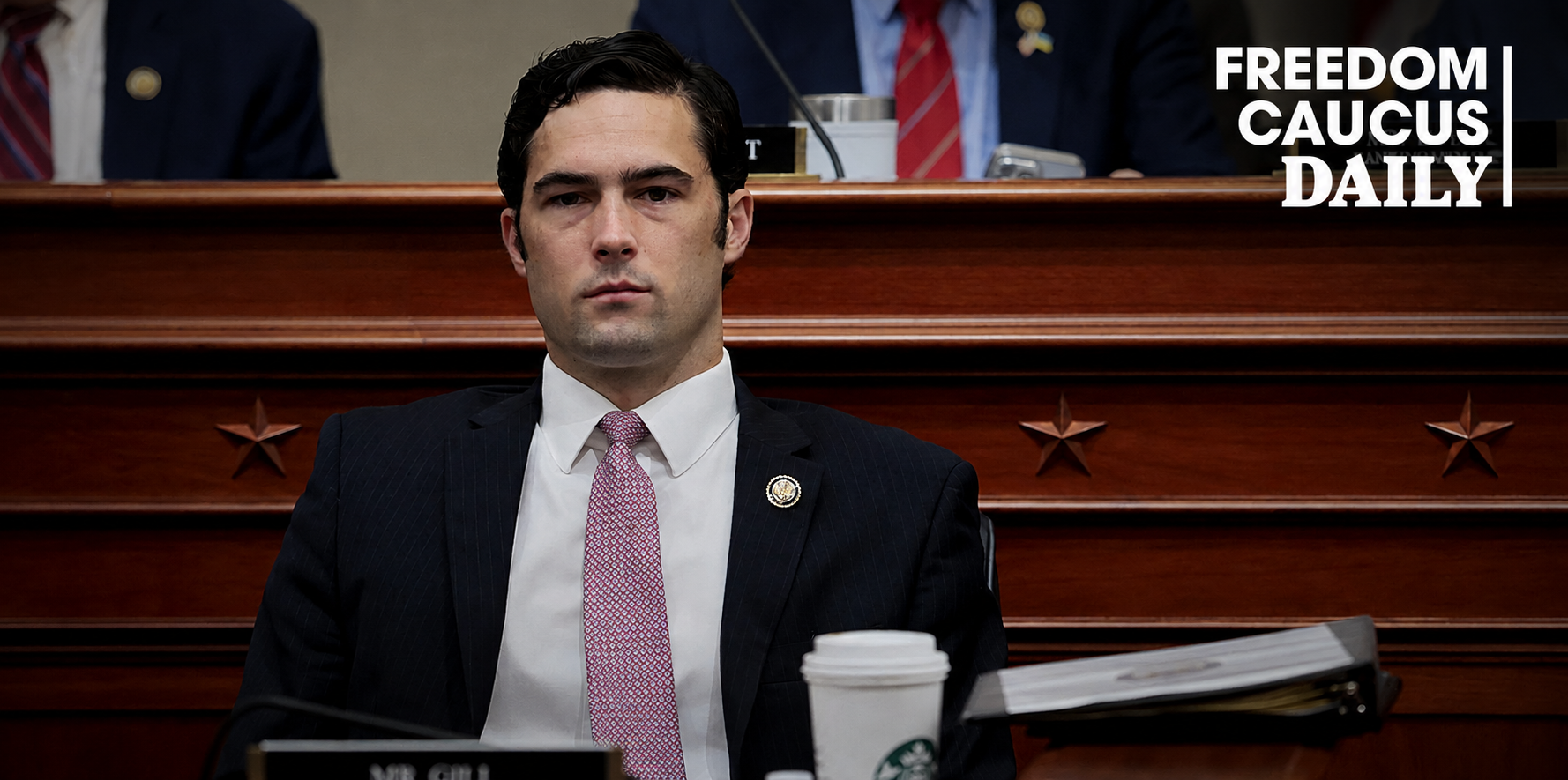
A congressional hearing took an unexpected turn Tuesday when Representative Brandon Gill asked the director of the Smithsonian’s National Museum of American History a simple question about manners — one that led to a pointed exchange over a museum-promoted document linking politeness to white supremacy.
Gill opened by asking Director Anthea Hartig, “is it important to be polite?” She answered, “Yes, sir.”
That answer set up his follow-up. “It’s also interesting because the same Mass Action Toolkit that your organization has been promoting references politeness as a defining characteristic of ‘White Supremacy Culture,'” Gill said. “M’am, are you a white supremacist?”
Hartig responded, “Hmmm, no, sir.”
Gill pressed further. “You’re not. Can you help me square why your organization says that being polite is being part of being a white supremacist?” Hartig replied, “I’m not exactly familiar with that passage of the Mass Action Toolkit.”
Gill said he would share the document with her before moving to his next line of questioning.
The document at the center of the exchange includes a graphic titled “Aspects & Assumptions of Whiteness & White Culture in the United States.” It lists a series of traits and beliefs the graphic characterizes as tied to “white dominant culture.” Politeness is among them.
The graphic goes further than manners alone. It cites the belief that “hard work is the key to success” as a marker of white culture. It lists the nuclear family — a wife and two to three children — as an “ideal social unit” associated with the same framework. It also references a beauty standard built around a “blonde, thin — ‘Barbie’ [prototype].”
Other items on the list include an interest in the British Empire and a belief in “objective, rational linear thinking.”
Newsweek first reported on the document in 2021. It was published in 2020, one year into Hartig’s tenure as director.
The exchange spread quickly on social media following the hearing. It is not the first time Gill’s questioning of a witness has drawn wide attention. Last month, a Democratic lawmaker said one of his questions about Somali immigrants nearly moved her to tears.
No further comment from Hartig or the Smithsonian was included in the hearing record provided.
The museum’s use of the toolkit is likely to draw continued scrutiny as lawmakers examine how federally funded cultural institutions frame concepts of race, culture, and identity in public-facing materials.