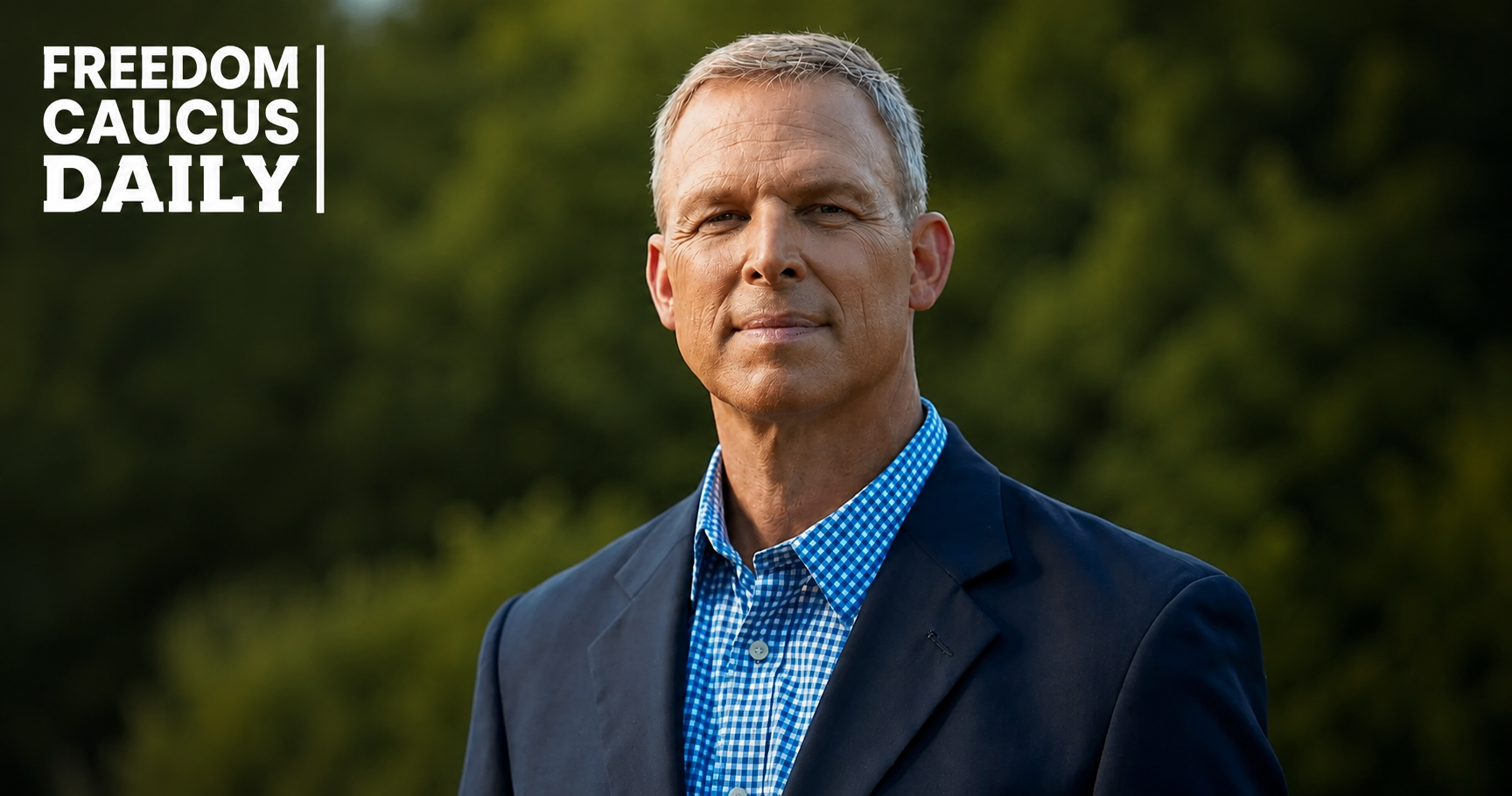
Pennsylvania Representative Scott Perry is pushing legislation to eliminate a federal mandate requiring new vehicles to include technology capable of detecting driver impairment and shutting off a car’s engine. The provision, embedded in the 2021 Infrastructure Investment and Jobs Act, has become a flashpoint over privacy, cost, and government reach.
Perry’s bill, the No Kill Switches In Cars Act, is short. Two paragraphs. It would strike the requirement that new vehicles “monitor a driver’s performance to identify driver impairment” and “prevent or limit vehicle operation if the system determines the driver may be intoxicated or impaired.”
He described the mandate bluntly. “If you don’t know what a kill switch is, it’s exactly what it sounds like. It kills your vehicle,” Perry said. “The vehicle itself decides whether it appreciates and approves of your driving based on a series of algorithms, computer metrics, etcetera, about how it thinks you should be driving. And if you’re not comporting with that, it shuts the vehicle off.”
Perry argued the mandate raises constitutional concerns and drives up vehicle costs. He pointed to his own preferences as an example. “Cars are expensive and one of the reasons they’re expensive is because we have all these systems on them. I’m a person that uses my mirrors to back up,” he said. “I’ve never had an accident backing up or parking, but yet, if I buy a new car, I don’t have an option whether I get a camera in the car or not.”
The Pennsylvania representative described hypothetical scenarios where the technology could malfunction at critical moments—a father rushing a pregnant wife to the hospital, a woman fleeing a stalker, a driver stranded in extreme heat on an Arizona highway. “There’s a million scenarios that haven’t been envisioned right now, where Americans’ rights are being taken away, and the nanny state is forcing itself upon us,” Perry said.
Perry tied the kill switch to broader concerns about surveillance. “Consider artificial intelligence, with facial recognition software, with gait analysis… with central bank digital currency,” he said, adding that “one of the major car companies just applied for patents to monitor while you’re driving your pupils, your respiration, your breathing, your heart rate, your conversation.”
The National Highway Traffic Safety Administration missed a 2024 deadline to finalize regulations implementing the mandate, citing limitations in available technology. A 2024 report to Congress found that “neither report found commercially available technology that detects driver alcohol impairment accurately and passively,” and that current detection methods carry an “unacceptably high” error rate.
Perry’s bill has drawn 21 additional co-sponsors beyond its original 14. Mothers Against Drunk Driving has pushed back on the bill’s framing, saying the underlying law “does not authorize” surveillance or remote vehicle shutdowns and would “save more than 10,000 lives every year” once implemented with privacy safeguards in place.
The dispute now moves to Congress, where lawmakers will decide whether to repeal the mandate before NHTSA completes its rulemaking process.