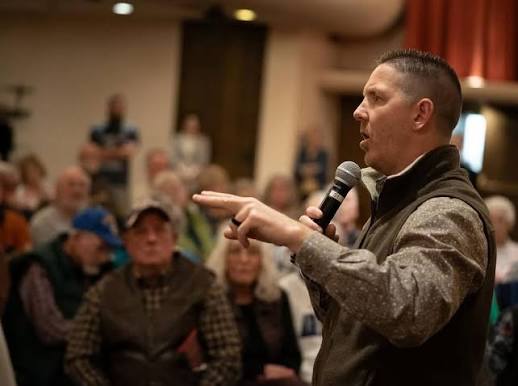
Oklahoma Representative Josh Brecheen is throwing his support behind President Trump’s demand to eliminate the Senate filibuster, arguing in a detailed constitutional case that the procedural tool has no basis in the nation’s founding documents and has become an obstacle to passing the SAVE America Act.
Brecheen’s argument begins with a direct claim: “The filibuster is unconstitutional.” He writes that the Constitution lists only seven specific instances requiring a supermajority vote — five in the original text and two added through amendments — covering actions such as amending the Constitution, overriding vetoes, convicting impeached officials, ratifying treaties, and expelling members of Congress. The filibuster, he notes, appears nowhere in that list.
According to Brecheen, the modern filibuster traces back to an unintended consequence of Senate procedure. In 1805, Vice President Aaron Burr advised the Senate to eliminate the “previous question” motion, a change that inadvertently removed the chamber’s ability to end debate through a simple majority vote. The first recognized filibuster followed decades later, in 1837.
“This accident, the filibuster, is in direct contrast to the wishes of our Founding Fathers,” Brecheen writes, citing Alexander Hamilton’s Federalist No. 22, which warned that supermajority requirements for ordinary legislation would “subject the sense of the greater number to that of the lesser.” He also points to James Madison’s Federalist No. 58, which cautioned that empowering a minority to block a majority would reverse “the fundamental principle of free government.”
Brecheen acknowledges that Thomas Jefferson supported supermajority requirements in the specific cases outlined in the Constitution, but notes that Jefferson also wrote to Madison in 1787 that “it is my principle that the will of the Majority should always prevail.” Brecheen argues that the Founders’ preferred check on legislative excess was the presidential veto, not a supermajority threshold in the Senate.
He also addresses a common defense of the filibuster — that Article 1, Section 5 of the Constitution allows each chamber to “determine the Rules of its Proceedings.” Brecheen contends that this provision does not permit rules that expand beyond the authorities the Constitution grants, arguing that Senate rules on cloture should not override the voting thresholds the Founders specified.
Brecheen traces the filibuster’s evolution from a two-thirds cloture requirement, used between 1837 and 1975, to today’s three-fifths threshold of 60 senators. He also notes that the tool shifted from a “talking filibuster,” requiring senators to hold the floor, to a “silent filibuster” that allows objections without sustained debate.
He argues that the practice is now blocking a legislative mandate delivered by voters. “We must stop allowing the tyranny of the few to overpower the will of the majority,” Brecheen writes. “It’s time to call the filibuster what it is: an unconstitutional accident.”
Brecheen’s position aligns him with Trump and a growing number of lawmakers pushing the Senate to eliminate the 60-vote threshold in order to pass the SAVE America Act, which would impose new voter identification and citizenship-verification requirements. Senate leaders have not indicated whether they will act on the proposal as the debate over the chamber’s rules continues.