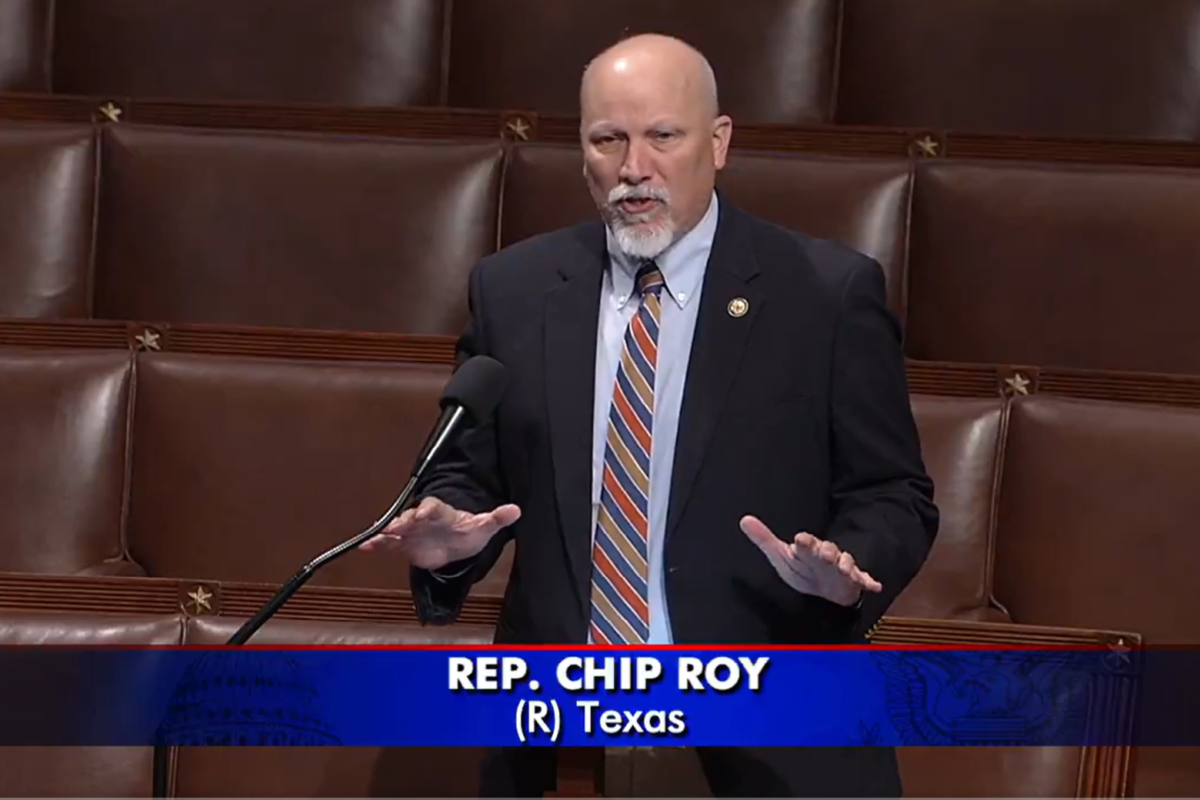
Virginia Representative Ben Cline is urging local governments in his state to stop using Flock Safety’s camera network after a WIRED investigation found the company built an artificial intelligence tool capable of identifying and tracking individual drivers, despite years of public assurances that its technology could not do so.
“Any Virginia municipality using this technology should stop,” Cline said. “Americans have a constitutional right to live their lives free from unchecked government surveillance. New technology does not strip citizens of that right.”
The tool, originally called Nightshift and now marketed as OS Investigate, draws on a network of cameras spanning more than 6,000 communities nationwide. According to WIRED, which reconstructed the software’s code from files served on Flock’s own login pages, the system can identify potential witnesses based on how often their vehicles pass through a neighborhood, surface a driver’s “associates” from cameras they pass together, and convert license plates into names, home addresses and relatives by cross-referencing police case files, 911 dispatch logs and commercial identity databases.
WIRED found 69 prewritten prompts built into the software that officers can select or edit before submitting to the AI. One instructs the system to find “witnesses based on vehicles most seen in [neighborhood] during [last 14 days] during [daily timeframe].” Another asks it to list everyone arrested more than twice in two years for any offense except narcotics charges, map where they live, pull calls for service at their addresses, and compile background profiles — described internally as a “workup” — on three of them.
Nineteen of the prompts require no plate, no name and no description at all. An officer need only supply a location, a time window and a pattern of behavior — vehicles that visited three or more retail locations in three days, for instance, or made repeat trips between cities over two weeks.
Flock has told the public for years that its cameras “cannot recognize, identify, or track individuals.” Spokesperson Paris Lewbel told WIRED that OS Investigate is a separate product from the company’s license-plate-reader technology, intended to help investigators work across data their agencies already have access to, and said its capabilities may change before a wider release.
Privacy advocates who reviewed the findings raised sharper concerns. Jay Stanley, a senior policy analyst with the American Civil Liberties Union’s Speech, Privacy, and Technology Project, said the software goes well beyond flagging wanted vehicles. Chad Marlow, who leads the ACLU’s “Get The Flock Out” campaign, said the lack of restrictions on how officers phrase their prompts could let departments effectively invent their own standard for suspicion.
Flock’s cameras have already drawn scrutiny in Virginia and elsewhere over how officers use them. A Washington Post analysis cited in the WIRED report identified 50 officers nationally charged with or accused of misusing plate-reader systems, more than half of them to track wives, girlfriends, exes or women they wanted to meet.
Flock said it plans to roll out new safeguards by the end of the year, including automated monitoring for abnormal searches and a requirement that officers attach case codes to queries. The company is also hiring engineers to expand the system’s capabilities, according to job postings reviewed by WIRED, including automated lead generation and cross-camera correlation tools that go beyond the version currently in testing.
Whether Virginia localities respond to Cline’s call is likely to become clearer as more jurisdictions weigh renewing or ending their Flock contracts in the coming months.